
Experienced Team, Excellent Results
Our Pool Maintenance Guides
At Floyd Contracting, we have over 25 years of experience when it comes to installing, building, and servicing above ground and in-ground pools. Being a pool owner can be quite a responsibility. We’ve compiled essential resources and information to help you get started.
Still have questions? Give us a call today!
Pool Chemistry
Balanced water chemistry is the single biggest factor in whether your pool stays clear, comfortable, and easy to maintain through the season. Test your water at least once a week — and always after heavy rain or heavy use — and adjust against the ranges below.
If your readings will not hold steady no matter what you add, the problem is usually mechanical rather than chemical, and our team can inspect your pool equipment and filtration system.
| Suggest Pool Chemistry Level | Action Required to Raise Pool Chemistry | Action Required to Lower Pool Chemistry |
|---|---|---|
| Ph 7.2 - 7.6 | Add soda ash | Add muriatic acid or sodium bisulfate |
| Total Alkalinity 100 to 130 ppm | Add sodium bicarbonate | Add muriatic acid |
| Chlorine (Unstabilized) 0.3 - 1.0 ppm | Add chlorine chemical | No action - chlorine will naturally dissipate |
| Chlorine (Stabilized) 1.0 - 3.0 ppm | Add chlorine chemical | No action - chlorine will naturally dissipate |
| Chlorine Stabilizer (Cyanuric Acid) 40 - 70 ppm | Add stabilizer | Dilution - partially drain & refill pool with untreated water |
Need a pool replacement or installation?
Vacuuming
Filter Operation
Your filter is the workhorse of the pool. Run it at least eight hours a day during swim season, and know which type you have before you start adjusting settings — DE, cartridge, and sand filters each require a different maintenance routine and a different backwash or cleaning schedule.
The guides below cover normal operating settings, cleaning intervals, and the warning signs that your filter needs service.
DE Filter Operation
Diatomaceous earth filters deliver the finest filtration of the three types, catching particles other systems miss. They require periodic backwashing followed by recharging with fresh DE powder.
Watch your pressure gauge — a reading 8–10 PSI above your clean baseline means it is time to backwash.
Download PDF
Cartridge Filter Operation
Cartridge filters use no backwashing, which makes them the most water-efficient option. Remove and hose down the cartridge when pressure rises above baseline, and soak it in a filter cleaner at the start and end of each season.
Most cartridges last two to three seasons before needing replacement.
Download PDF
Sand Filter Operation
Sand filters are the most forgiving to operate and the most common on above ground pools. Backwash when pressure climbs above your clean baseline, and plan on replacing the sand media roughly every five years.
If your water stays cloudy after backwashing, the sand has likely channeled and needs to be replaced.
Download PDF
Pool Construction
When it comes to building and installing pools, there are certain choices and specifications you may not know how to address. From liner choice to maintenance tips, our team has years of experience to help you make these decisions. We’re here to help!
Choosing the right liner and pool structure affects how your pool looks, how long it lasts, and how easy it is to service down the road. The references here covers the liner types and buttress configurations we install most often.
If you are replacing an existing liner or planning a new build, our pool installation team can walk you through which combination suits your site.
Liner Types
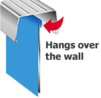
Over-the-Wall or Overhang Line
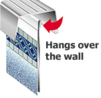
J-Hook or Uni-Beaded Liner
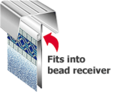
Beaded Liner
Buttress Types
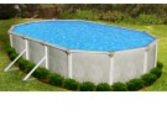
Long Buttress Pool
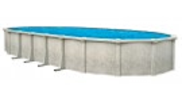
Short or Buttressless Pool